Why would you spend time at a “Death Café”?
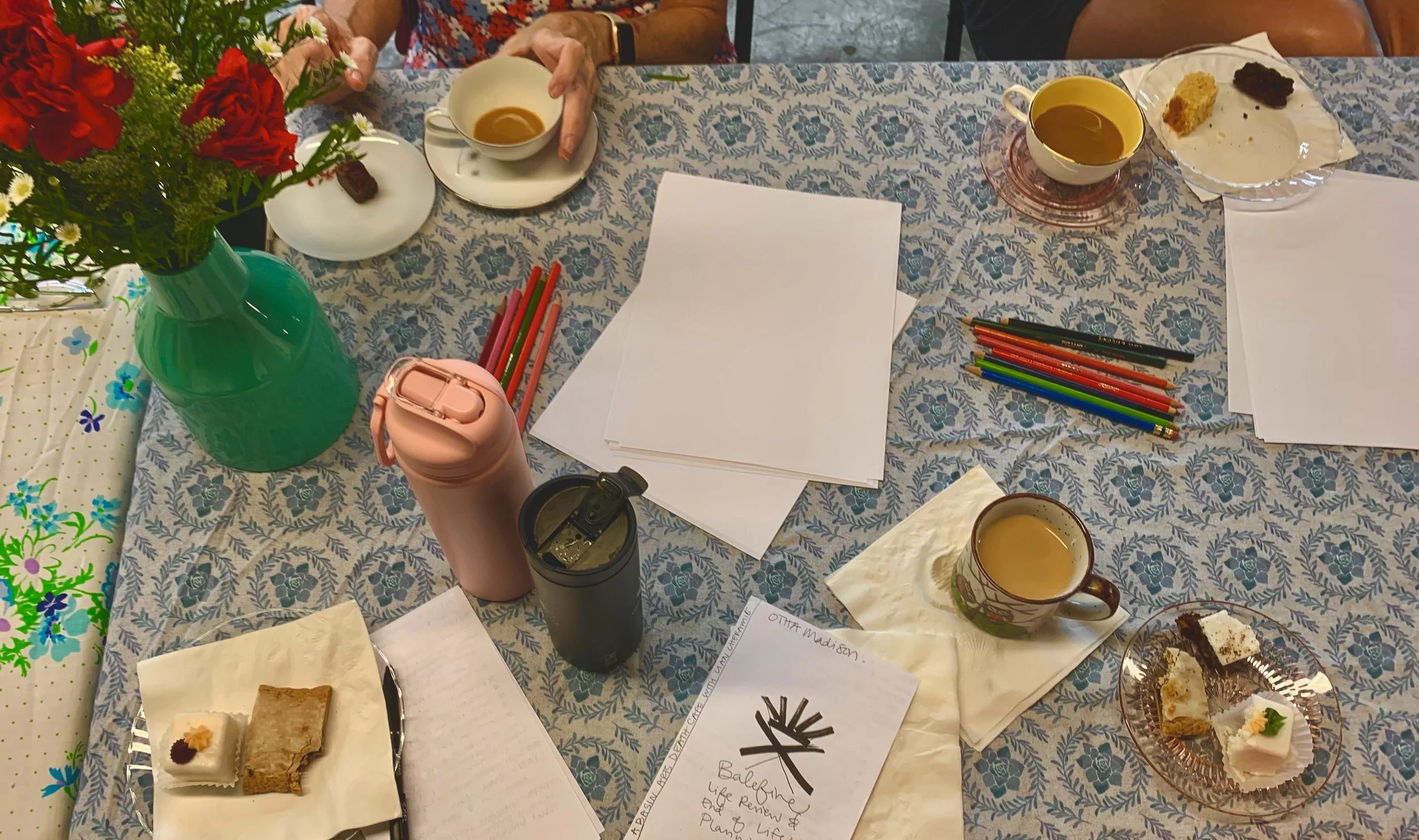
So, I host Death Cafés sometimes. There’s a standard operating procedure created by an established organization. I didn’t make it up. But it’s still a new concept to many.
People who are new to this kind of gathering often ask these kinds of questions:
Is this going to be depressing?
Am I expected to share something traumatic?
Is this therapy?
Is this religious?
Why would anyone spend their precious time talking about death?
Well, I’ve got some answers for you.
No, it’s not always depressing. Many people experience, more than anything, a feeling of connectedness and wonder.
You’re not expected to share anything, really. I may prompt you to introduce yourself and watch if it looks like you may have a response bubbling up to gently encourage you, but no sharing is actually required. People often just feel called to connect.
Death Cafés are absolutely not therapy, and they’re not a replacement for a grief group, either. This is a place to share and be curious, but not meant to diagnose, treat, or heal you along your journey. Though, I do anticipate you’ll walk away feeling a bit more grounded, a bit more cared for, and a bit less alone.
Death Cafés are NOT religious, though people’s religion, spirituality, and personal philosophies are often how they explain their concepts and feelings around death, life, transitions, and their place in the world and the lives of those around them. You’ll want to arrive with an open mind, mindful that everyone is always just trying to do their best and find whatever happiness they have access to in this life. So, be kind and understanding in how you listen and in how you share.
This last question is where I want to dig in. Why WOULD anyone want to spend their precious time talking about death?
The truth is, Death Cafés are really about life. How do we approach and manage and maintain our lives… knowing that death is always lurking? Always threatening to take away our loved ones? Always a memory haunting us and a cause of our grief? I think it’s powerful to face our fears, to approach them together with our community, with loved ones, and with trusted friends in order to get THROUGH it all and be better for it.
Talk about death has never been a strange topic for me. When I was in utero, my mother’s father died. I attended the funeral in my mother’s belly. I was deeply affected when my step-grandfather (the man who helped to raise me) died when I was in college. Because of that I took a different approach and was intricately involved in the end of life care for my grandmother. As difficult as it was, I’d never felt more in and on purpose in my life. Until my mid-twenties I never met my father’s family, and only found them because I found his obituary online. I’ve always been interested in history and genealogy, and often research mine and others’ family lines, trying to understand the butterfly effects of decisions, relationships, and world events and how they have all lead to where we are now.
I often wonder what I’ve lost along the way, having not connected to people who died before I had the ability or wherewithal to ask questions, to investigate what made them tick and how that all trickled down into who I am and who I am becoming.
Enough about me.
I often share a few key phrases on my Death Café flyers and I’ll expand on those ideas here:
Nonjudgemental Community Care
Generally, people together in a shared community, whatever form that takes, spend surprisingly little time together simply listening. There’s often an agenda, tasks to complete, appearances to keep up, our lives to hold together. We’ve… let drift away the importance of seeing each other and showing up for people simply where they are. Getting to know those around us, even if we never see them again, helps us be more mindful and caring in all of our interactions and can really make a positive difference over time in how we treat each other.
Share Stories and Listen to Others
When was the last time you talked about that hard thing you went through, with people who genuinely wanted to listen? Never? Years ago? Thought so. Everyone experiences loss and carries these stories in many different ways. Sometimes we’ve never shared certain stories. Sometimes we’ve never had the chance. Sometimes hearing someone else’s story helps us make sense of our own.
Gather Wisdom
Death is one of the few experiences that every person, every family, every community eventually encounters. People of all different ages and cultures have learned different lessons along the way. Death Cafés create a place where those lessons can be shared and cherished instead of lost and tucked deep in the back of our minds' filing cabinets.
Build Connection
No one is ever compelled to share something they’re not comfortable sharing. However, Death Cafés open up a clearing in the overgrown forest of our lives where there’s space to be a little softer and more open than we usually are. When we shift into this space, it’s natural to build connection with other attendees or simply feel less alone in our experiences. We remember that every person in the room and every person we encounter is navigating the paths of love, change, uncertainty, and eventually loss.
Practice Feeling Complicated Feelings
You already understand what I’m talking about. Some things are hard to even put into words. That doesn’t mean they don’t exist. At Death Cafés, everyone is practicing sharing these stories, contributing to others, opening their hearts to others’ wholeness, and sitting in grief and uncertainty and loss as inevitable parts of life, in a moment in time we’ve set aside for it. Nothing else is being demanded of you when you set time aside for this. Death Cafés don’t eliminate our experience of these things and they don’t teach us how to avoid them. These gatherings can help us become more familiar with these feelings so when they are demanded of us, when they do occur, it’s not such a shock to our system. We’re made more ready to wade through the underbrush to the other side and perhaps forge our own path and help others through.