
Journal
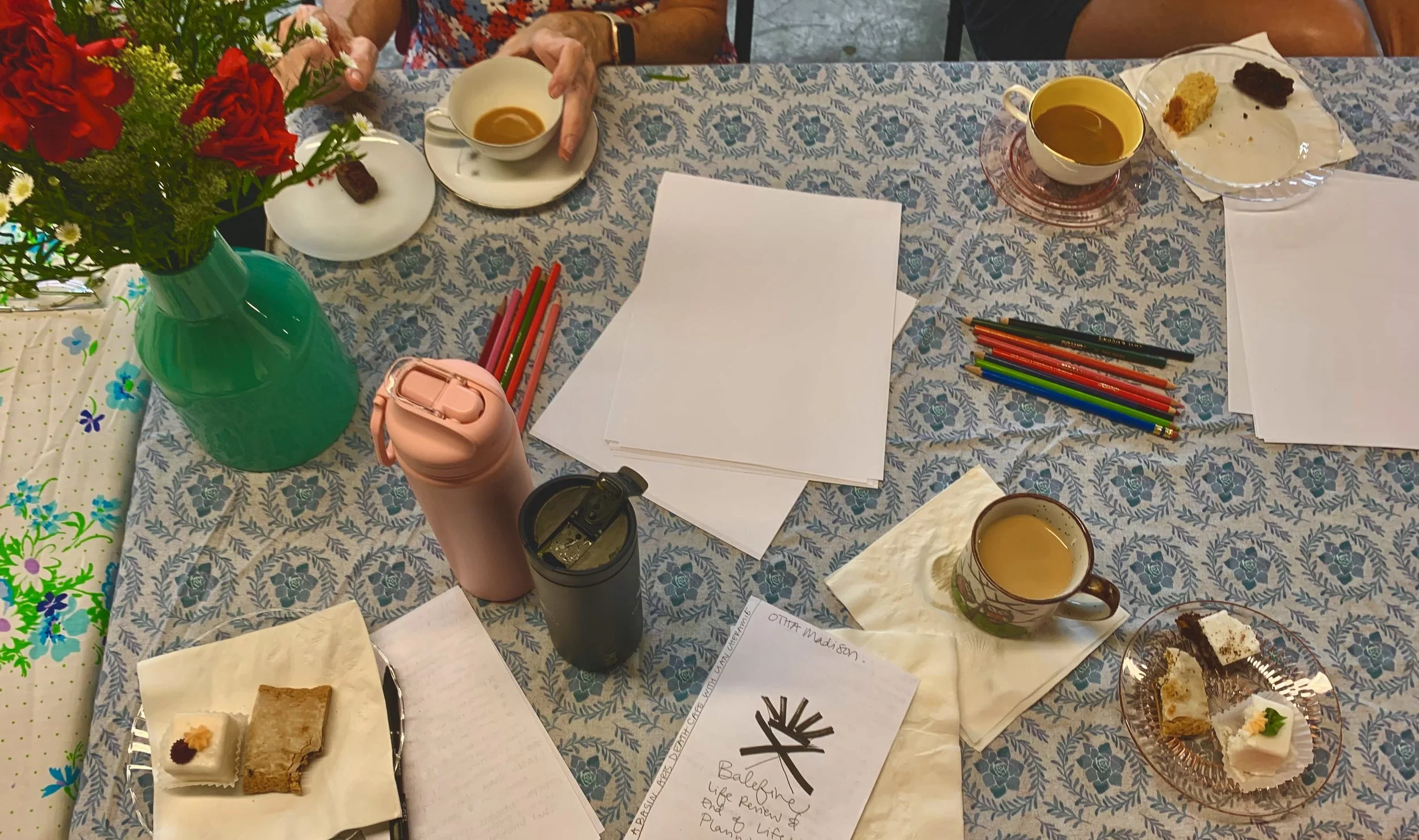
Why would you spend time at a “Death Café”?
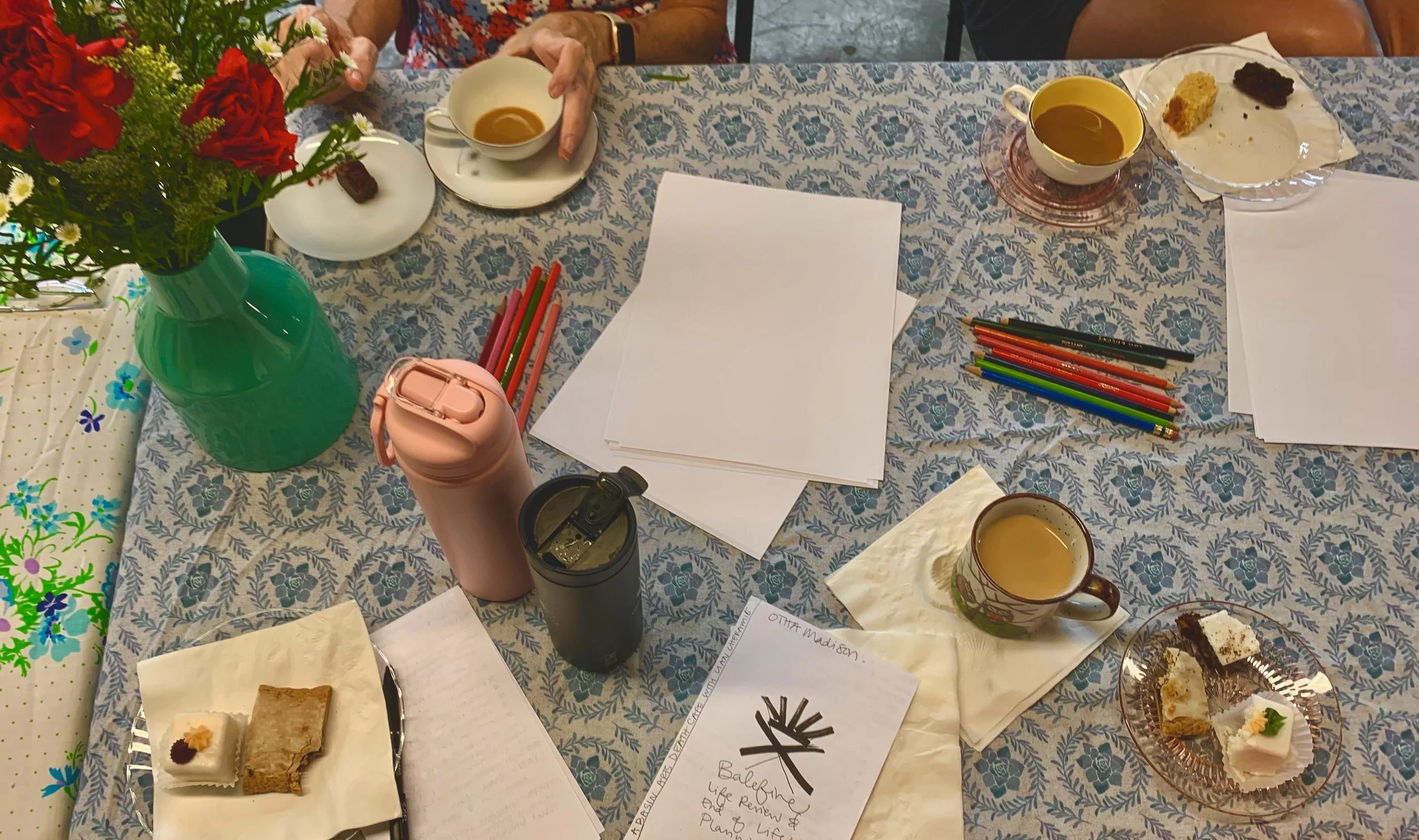
So, I host Death Cafés sometimes. There’s a standard operating procedure created by an established organization. I didn’t make it up. But it’s still a new concept to many.
People who are new to this kind of gathering often ask these kinds of questions:
Is this going to be depressing?
Am I expected to share something traumatic?
Is this therapy?
Is this religious?
Why would anyone spend their precious time talking about death?
Well, I’ve got some answers for you.
No, it’s not always depressing. Many people experience, more than anything, a feeling of connectedness and wonder.
You’re not expected to share anything, really. I may prompt you to introduce yourself and watch if it looks like you may have a response bubbling up to gently encourage you, but no sharing is actually required. People often just feel called to connect.
Death Cafés are absolutely not therapy, and they’re not a replacement for a grief group, either. This is a place to share and be curious, but not meant to diagnose, treat, or heal you along your journey. Though, I do anticipate you’ll walk away feeling a bit more grounded, a bit more cared for, and a bit less alone.
Death Cafés are NOT religious, though people’s religion, spirituality, and personal philosophies are often how they explain their concepts and feelings around death, life, transitions, and their place in the world and the lives of those around them. You’ll want to arrive with an open mind, mindful that everyone is always just trying to do their best and find whatever happiness they have access to in this life. So, be kind and understanding in how you listen and in how you share.
This last question is where I want to dig in. Why WOULD anyone want to spend their precious time talking about death?
The truth is, Death Cafés are really about life. How do we approach and manage and maintain our lives… knowing that death is always lurking? Always threatening to take away our loved ones? Always a memory haunting us and a cause of our grief? I think it’s powerful to face our fears, to approach them together with our community, with loved ones, and with trusted friends in order to get THROUGH it all and be better for it.
Talk about death has never been a strange topic for me. When I was in utero, my mother’s father died. I attended the funeral in my mother’s belly. I was deeply affected when my step-grandfather (the man who helped to raise me) died when I was in college. Because of that I took a different approach and was intricately involved in the end of life care for my grandmother. As difficult as it was, I’d never felt more in and on purpose in my life. Until my mid-twenties I never met my father’s family, and only found them because I found his obituary online. I’ve always been interested in history and genealogy, and often research mine and others’ family lines, trying to understand the butterfly effects of decisions, relationships, and world events and how they have all lead to where we are now.
I often wonder what I’ve lost along the way, having not connected to people who died before I had the ability or wherewithal to ask questions, to investigate what made them tick and how that all trickled down into who I am and who I am becoming.
Enough about me.
I often share a few key phrases on my Death Café flyers and I’ll expand on those ideas here:
Nonjudgemental Community Care
Generally, people together in a shared community, whatever form that takes, spend surprisingly little time together simply listening. There’s often an agenda, tasks to complete, appearances to keep up, our lives to hold together. We’ve… let drift away the importance of seeing each other and showing up for people simply where they are. Getting to know those around us, even if we never see them again, helps us be more mindful and caring in all of our interactions and can really make a positive difference over time in how we treat each other.
Share Stories and Listen to Others
When was the last time you talked about that hard thing you went through, with people who genuinely wanted to listen? Never? Years ago? Thought so. Everyone experiences loss and carries these stories in many different ways. Sometimes we’ve never shared certain stories. Sometimes we’ve never had the chance. Sometimes hearing someone else’s story helps us make sense of our own.
Gather Wisdom
Death is one of the few experiences that every person, every family, every community eventually encounters. People of all different ages and cultures have learned different lessons along the way. Death Cafés create a place where those lessons can be shared and cherished instead of lost and tucked deep in the back of our minds' filing cabinets.
Build Connection
No one is ever compelled to share something they’re not comfortable sharing. However, Death Cafés open up a clearing in the overgrown forest of our lives where there’s space to be a little softer and more open than we usually are. When we shift into this space, it’s natural to build connection with other attendees or simply feel less alone in our experiences. We remember that every person in the room and every person we encounter is navigating the paths of love, change, uncertainty, and eventually loss.
Practice Feeling Complicated Feelings
You already understand what I’m talking about. Some things are hard to even put into words. That doesn’t mean they don’t exist. At Death Cafés, everyone is practicing sharing these stories, contributing to others, opening their hearts to others’ wholeness, and sitting in grief and uncertainty and loss as inevitable parts of life, in a moment in time we’ve set aside for it. Nothing else is being demanded of you when you set time aside for this. Death Cafés don’t eliminate our experience of these things and they don’t teach us how to avoid them. These gatherings can help us become more familiar with these feelings so when they are demanded of us, when they do occur, it’s not such a shock to our system. We’re made more ready to wade through the underbrush to the other side and perhaps forge our own path and help others through.
Oh, and there’s often a promise of hot drinks and baked goods. That’s the best part.

PRESS: Interviewed by Vox

I had the absolute pleasure of corresponding with Anna North of Vox on a piece about why people want to be death doulas. In particular, the piece focused on recent news about famous people wanting to be death doulas, namely, Nicole Kidman.
Anna, with additional interviews with mentors and colleagues of mine that I admire, Alua Arthur and Cole Imperi, theorized that recent increased interest is part of a larger shift in how we think about mortality.
Here are my quotes in context:
What a death doula does
Death doulas can also advocate for a dying person with doctors and other medical staff. “A lot of times, people just will believe doctors as the expert in a situation when there’s actually a lot of room for negotiation, questions, space, time,” said Madison Barras, who trained as a death doula and now helps people think about their own mortality.
Why more people want to be death doulas
… in recent years, more people are moving … toward a greater embrace of mortality. The pandemic, in particular, forced the whole country into a new intimacy with death and dying, Barras said. “It sort of bubbled to the surface that, Oh, this is happening to everybody, all of the time.”
That’s been coupled with a rise in emotional openness, fueled by social media confessionals, Barras said. “It’s more acceptable and encouraged to share the human aspect of being alive,” Barras said.
…
Many people become interested in death doula work after a personal loss — Barras, for example, started training after caring for her dying grandmother.
Click here to read the entire article, though you may need a Vox membership to read it in entirety. Feel free to send me a message if that link isn’t successful and I’ll send you a gift link to read it.

How Caregivers Can Manage the Space Where Someone Dies
Honoring Sacredness
When someone you’re helping to care for is reaching the end of their life, or is in a state that will otherwise not improve, focus can turn toward comfort, safety, and quality instead of increasing productivity, encouraging improvement, and forward-thinking wishes. It’s at this point that instead of thinking, “someday I’ll dust that” or “maybe next week we can put that photo album together”, we begin understanding that it’s our duty to work swiftly and with overflowing respect and compassion for all those involved. This can mean making their hospital room more comfortable, their at-home main space more welcoming and inviting to visitors, or personalizing their space in an assisted living or nursing home environment. There are as many situations and places as there are people.
Honoring the sacredness of this transition can help all those involved have a more meaningful experience. It allows space for emotions to develop, for relationships to grow and change, and for the magic of life to be cherished and remembered mindfully.
My hope is that this post will be a starting point for caregivers and those supporting them to approach this task mindfully. I know that this stage can be overwhelming for many, but having a blueprint like this to refer to can provide a stable foundation for an uncertain time.
Starting the Process
The first piece of advice I’ll share is that the best thing you can do for your loved one is to not try to fit their experience, or yours, into a neat box. It can be messy - the space and the process. Trying to check off a list as if everything will happen in a predictable sequence is a formula for disappointment, stress, and resentment. Meeting your loved one exactly where they are and actually listening to what they prefer, no matter how out of the box it may be, is your best chance for connection and compassion. If you thought your loved one would do best in a cookie-cutter dying experience, you’d send them off for someone else to care for them and visit very infrequently. However, remember this: that’s what happens with some people and it's not wrong or something to be ashamed of. Sometimes, people aren’t prepared. Sometimes, they know themselves well enough that they know they can’t provide the care their loved one needs or be as supportive as they want or as they know their loved one deserves. But I don't think you’re reading this because you want that for yourself or your loved ones. I think you’re here because you want something more. Something more personal, something more passionate, something more sacred. That’s possible with a little awareness, preparedness, and community cooperation.

Helping Yourself Through This
So how can you best prepare yourself for supporting someone in this stage?
I firmly believe you need to be aware of what happens to a body as it is approaching death. At first, honestly, it can feel revolting to know these things. It can feel wrong to read about, learn about, and talk about the body mechanics of dying. However, it happens to everyone. It will happen to everyone you love. And it’s natural and not necessarily an emergency. Knowing what happens in the months, weeks, days, and hours leading up to death can have a calming effect for when you actually experience it. Learn to notice patterns and be willing to confidently address changes not only with the rest of your care team, but also with your loved one experiencing illness. Chances are, they know the state of their own health, but denial can be a very strong force to help someone live out each day.
Here are two resources for learning more about what happens as a body approaches death:
There are plenty more available and don’t be afraid to ask medical professionals on the care team! Start with this and make sure you have a community of people you can talk to, whose opinions you trust. You need to be able to unload about your worries, frustrations, and observations without judgement to someone who is also willing to be curious and pay attention to your patterns. This could be your religious leader or teacher, your elders, your therapist, your friends, or any number of people. When they suggest you do something to care for yourself, or offer to support you in myriad ways, it’s then your job to trust them and, for the most part, do what they say.
Accept the casserole. Go out to dinner. Let them come over and clean your kitchen and do your laundry. Respond when they send you messages and check in. You don’t become a hero by isolating yourself and becoming “strong”. Be a wibbly-wobbly, vulnerable, soft and squishy, fully-feeling human and you’ll find you’re able to bend and tuck and roll and adjust better to what comes up during these times.
Helping Your Loved One Who Is Dying
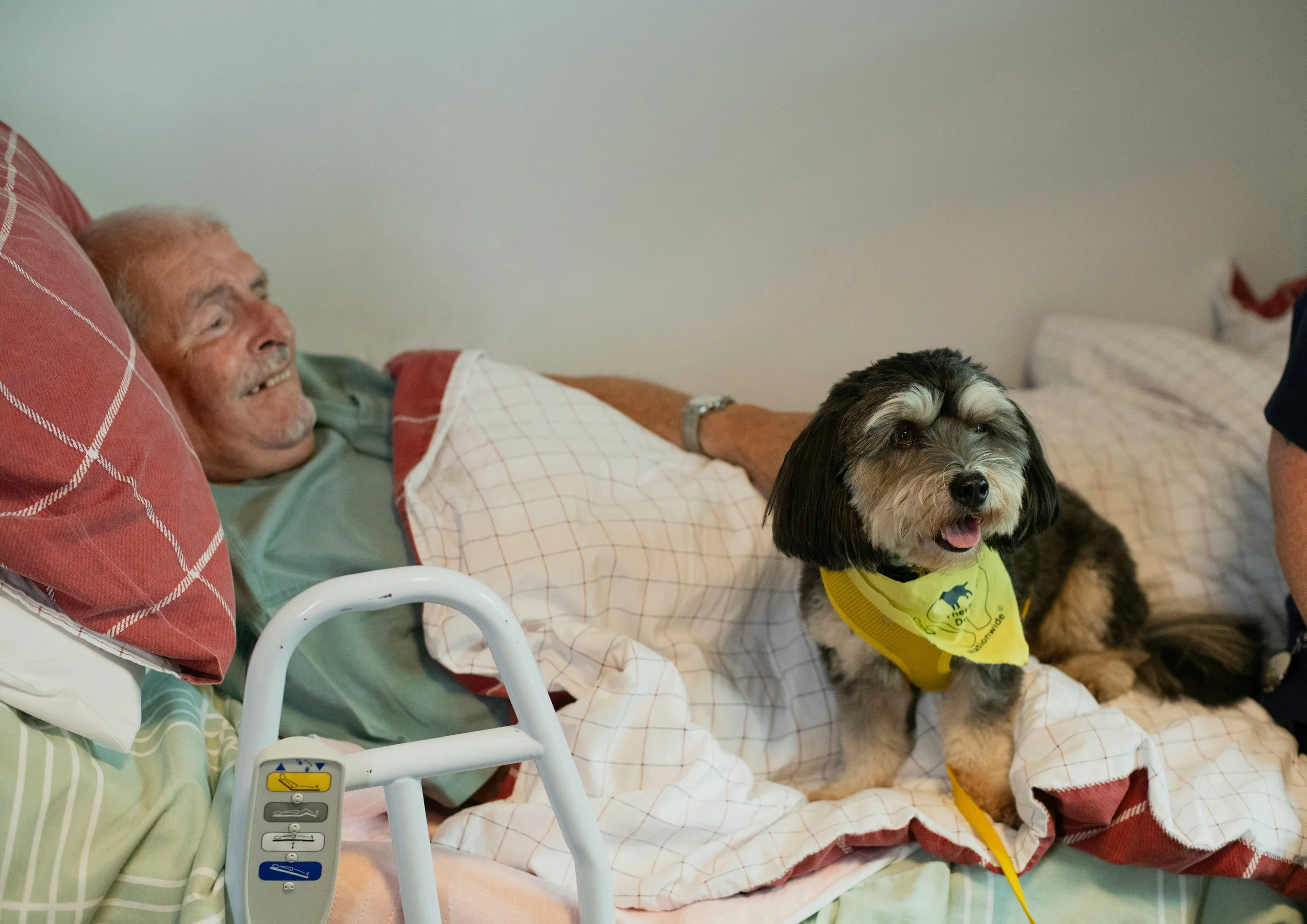
When you notice the signs of decline, or decide with their care team that it’s time to shift care a bit, do your best to give the floor to your loved one as much as possible. Learn how to ask open-ended questions and honor whatever comes up for them when you’re asking their preference for all kinds of things. Also keep in mind that too many choices can feel overwhelming for some people or in certain situations. It’s in your best interest to learn advanced communication skills like active listening and withholding judgement so you can start conversations presenting the scope of what you’ll be discussing, and ask their preference - have they thought about these things before and have their own questions and ideas? Do they want a few suggestions to choose from with the possibility that they might have their own ideas, too? Or would they prefer to choose from a menu of things prepared by or informed by expert opinions? All of these options are valid.
Here are some examples:
Helping Their Loved Ones
You as a caregiver are likely not the only stakeholder in the dying person’s life. It’s your job to investigate early on who else might be interested in how things are going, and be in regular communication with them at the preference of the person you are serving. It’s not your job to intervene with your opinion of what should be done or who should be doing what. It’s my opinion that an enthusiastic YES is the only answer that’s acceptable when it comes to being on someone’s care team. There are many different roles with different levels of participation and responsibility. Remember that resentment is easy to grow and hard to kick. It can be natural in the process and not something to be ashamed of, but something to be aware of and not taken lightly.
Ask your care team candidates: if they can’t be there as often as they like, how else may they want to contribute? Do they want to provide regularly scheduled meals for those present? Provide flowers, blankets, collect memories from others, gather letters and keepsakes from scattered loved ones to share with the dying person? Let them share what they think they want to do, and collaborate with the rest of the team on what's needed and helpful. These can all be incredibly meaningful contributions that don’t require being present for significant periods of time.
Preparing The Space
One of the first things I look for when assessing the space of someone who is dealing with chronic illness, terminal diagnosis, or imminent death is: How practically safe is the area? How are the electrical cords? What about other fire hazards? Is there space for their walker or wheelchair to move around freely? How about rugs as tripping hazards or animals, large or small? Are there breakable items or sharp corners where a person might grab for support? Are all the doors and knobs functional so no one gets locked in anywhere? Old appliances can also be a danger, especially smaller items that can be older. Check out what’s in their drawers and spend repeated time with them at different times of day in order to understand their patterns and behavior to look for safety hazards. If their memory is deteriorating, consider what around-the-clock care looks like for them, whether that’s shifts of loved ones staying in place, or caregivers professional or otherwise visiting on a regular basis? Consider medication administration who manages and records it. Many people prefer to maintain autonomy for as long as possible, which can complicate things if no one is paying attention to signs of memory loss, however small. There’s no way for this to cover everything, and everyone’s situation is unique. Please use this as a starting point and inspiration.
Next, focus on comfort and the sensory experience. If a home is old and hasn’t received a deep cleaning recently, it may be worth it to invest in that or put in the time if you have it. Remove dust that can make breathing more difficult. Wipe down walls and clean upholstery that can hold old smells. Sanitize surfaces, thinking about nooks and crannies where things might spill. Manage pests and check for water damage under sinks. You know the drill. These things can go neglected even in the homes of young, active, and healthy people. Managing this for your loved one can bring a refreshed and attentive atmosphere into the home.
Update their pictures on the walls, make photo albums for them to look through, and gather letters from loved ones for them to read. This can aid in their own life-review processes and help them understand their own story better, allowing them to share with you more freely.
Create playlists/mix CDs/tapes of their favorite songs and make it easily accessible for them. Get recordings of their favorite or new books that they’re interested in. Gather books or other media they may want to engage if they are able to do so.
Lit candles may not always be the safest option especially if they’re home alone or if they use supplemental oxygen. Electrical or battery powered candles can provide a calming atmosphere without the hazard and provide a place of movement for eyes to land during contemplative times. Essential oils in diffusers or on special pillows or even in lotions as appropriate may be a great source of comfort and a wonderful addition to different routines throughout the day.
Ask what they want to eat and drink. And make sure what you provide meets their brief! Often there are hard candies that are safe to let melt in the mouth. And oftentimes near end-of-life or during a difficult or prolonged illness, appetite may wax and wane and they may not be able to eat or drink as they’d like.
Get soft items like pillows and blankets they like. Cozy socks, a warm robe, safe fidget toys and the like may be a real interest to them as they likely have a lot of time alone. If they have something to keep their hands busy in this way, this can lessen anxiety and prevent dysfunctional behaviors such as skin picking, scratching at IVs, and so on.
Seeing natural light is really important for quality of life.
If getting physically outside to take in the changing weather and seasons isn't safe or reasonable, then a window to see a tree or any green space or the sky is preferred. Being connected to the world outside their room or home, especially if they are confined, helps people to understand the passage of time and to feel less lonely and more connected.
If the person you’re caring for has a preference for the atmosphere in their room, you can help establish that boundary. Create a place with a bench or a couple of chairs for people to sit before entering the home or entering the room. If that’s not possible, place a special mat in front of the door or a poster with a message near the door. Add a scent mist they can spray on themselves before entering, or a short phrase or passage to read to set the tone. You can also ask that people take off their shoes, remove hats, or set down burdens and invite visitors to be fully present. Ask preferences about pets and children, and idle chatter in the room. There’s a lot to think about, but making it clear is kind for both the patient and the visitors. Clear boundaries allow people to interact with confidence especially if they’re overwhelmed with emotion or other decisions.
Making it functional means making sure all the materials you need are reasonably in reach: Tissues, a change of clothes, communication devices and chargers, medical supplies, etc. Take the time to organize these items in a functional way and everyone who enters the room will be grateful.
Tips for Making the Space Work for Assorted Service Providers

Keep a notebook or tablet with a notes app or otherwise some kind of accessible-to-everyone spreadsheet to record things every day to make reporting to service providers seamless. Keep track of meals, meds, activities, needs and wants, as well as hygiene practices. This information can be helpful for service providers so they know exactly what their patient or client is experiencing and sometimes notice patterns it takes an expert to understand. Keep extra pencils, pens, sharpies, masking tape, safety pins, and paper nearby.
Reserving some functional bedside floorspace is important not just for the patient or client’s safety, but also for cleanliness and ease of access for service providers.
Make sure there is open tablespace for whatever needs arise. Invest in or borrow a couple of TV tray type tables that can be set up whenever a service provider attends the patient or client. This can give them space to place their belongings that’s not the floor and gives them peace of mind for sterile setups that don't interfere with the normal setup of the room. The same goes for folding chairs.
Many home spaces are not built with bright lights in mind but it can be important for proper care. Make sure to have lanterns or access to lamps and functioning blinds to let in the most light when needed. The same goes for clinical or assisted living settings - the bright lights can be too harsh for all of the time so see about safe lamps and soft lighting options to make the space more comfortable.
Setting up an air purifier or making sure the windows can be opened helps with ventilation and sanitation. Stale air can be especially noticeable in settings where people are always present.
Transitioning The Space After Death Has Occurred
I remember feeling a deep sense of natural responsibility being the first family member to enter the room where my grandmother took her last breath, waiting for my mother to arrive, waiting for the funeral home to retrieve her from her rehabilitation therapy/hospice room in an assisted living facility. My body ached for something to do, so I remember spending time collecting her things and lovingly arranging them to take home. And then came the task of what to do with it all. I suggest asking the dying person before it occurs - how do they want to be remembered and honored here? If that can’t happen, when you find yourself in this situation, you can simply take the time to pause. This is a major transition point. You’re allowed to take it in. It will help with your grieving. It will help your brain and body understand that a change has occurred.
From there, cleanse in whatever tradition feels natural for you. Smoke cleansing? Singing? Praying? Working alone, or together with others? Will you invite service providers in for this part? Whose job will it be or who will be the leader or director? Consider hiring a professional to do a complete clean out to pull the linens and reset the space according to your plan to make it functional again.
I can’t emphasize enough how important it is for everyone to plan who gets what of their possessions ahead of time, but if that process has not occurred already, now isn’t the time to trouble yourself with it. Until after your loved one’s body disposition is complete, I suggest the task be to set aside and preserve respectfully so that when the time does come to sort out their belongings, you’re encountering a well-organized space, not a jumbled mess.
Many hospice organizations or community foundations can typically assist with retrieving medical equipment and body care materials that are able to be donated and distributed to those in need. If you can, pay it forward with those items.
Looking Forward and Moving into Grieving, Mourning, and The Rest of Your Life
Now that your loved one has departed this life, it then becomes your job to truly care for yourself and your loved ones still here with you. Embrace opportunities to share your stories. Laugh and cry and be honest. Accept help. Attend grief groups. Read and learn and share your experiences through this. I think the best way to integrate what you’ve learned through times like this is to share your wisdom with others. Take time to reflect, allow yourself to float along the rivers of grief, and stop along the way to share what you’ve discovered. Your loved ones want to support you and they want to learn from you. It can feel awkward to open up at first, but sharing with confidence and humility can be the spark that helps someone else have a chance at a mindful experience for themselves in the future.
Not everyone who experiences grief needs to become a death care educator, but sharing about this time, a time that is required for everyone who lives, is an important part of how I keep my own grief moving and find meaning in my experiences.

Embracing Uncertainty: The Key to Embracing Life
The Illusion of Control
We like to believe we’re in control. We make plans, set goals, and structure our lives around the expectation that things will unfold the way we anticipate. And yet, as I’ve learned—from both my work as a death doula and my own life—control is fleeting. If we hold onto it too tightly, life has a way of blindsiding us. But rather than fearing uncertainty, what if we embraced it as an essential part of living?
“As soon as you think you’re in control of this game, blindsided.”
This lesson from Survivor (I’ve recently been making my way through all 47 seasons, which I’ve never seen before!) holds true in life as well: we are always in flux. The more we embrace that, the more fully we can live.
Blindsided: When The World Changed Overnight
In 2020, I had a plan. I was ready to launch into a new life—travel, a job abroad, financial stability. I was living in Colorado, working at a recreational resort and not responsible for anyone but myself. I was making decent money, I was coming into myself by leaving my home state, going on my own, and forging into a plan I’d never seen anyone I know do before. I thought I was ready for my uncertain future. And then, in the span of days, everything fell apart. A pandemic swept in, my job disappeared, my housing vanished, and I was left scrambling.
I moved in with someone I barely knew. (This turned out to be the decision that gave me the most confidence. The most wild thing to do but one of the best decisions through this wild ride.) I survived off of unemployment. I made choices that, in hindsight, feel surreal. And yet, looking back, I can see how all of it was necessary for my growth.
I learned that I can survive anything. I can adapt without losing myself. I can stay true to who I am, even when everything around me is shifting.
But more than that, I learned a truth I had long resisted: I am never truly in control, and that’s okay.
The Transformative Power of Uncertainty
At its core, uncertainty is what makes life alive. If everything were predictable, there would be no growth, no transformation, no real experiences of becoming.
I see this all the time in this role as a death worker. People try to fight against the inevitable, the loss, the grief. They fear death because it is unknowable. But the truth is, everything is unknowable. Even our next breath is uncertain.
So how do we live with that? How do we make peace with the fact that we don’t know how long we have, how things will turn out, or what is coming next?
We prepare for life by living it now.
Instead of fearing death, we can focus on making our time meaningful.
Instead of waiting for certainty, we can take action in the present moment.
Instead of clinging to a fixed identity, we can allow ourselves to evolve.
The more we resist uncertainty, the more we suffer. But when we lean into it, we open ourselves to possibility.
Reframing Stability: What Does It Really Mean?
For most of my life, I thought stability meant certainty. It meant knowing what to expect, having solid plans, feeling like the ground beneath me wouldn’t shift.
But after losing my grandparents in my early twenties—my foundation—I realized stability is something different. Stability isn’t about controlling outcomes. It’s about being grounded in myself, no matter what happens.
For me, stability now means:
✅ Knowing I can regulate myself through routine and self-care.
✅ Trusting in my ability to navigate change.
✅ Being flexible enough to adapt when life shifts.
It doesn’t mean life will never feel chaotic. It just means I know how to hold steady in the storm.
The Beginner’s Mind: Leaning Into Growth
One of the hardest parts of embracing uncertainty is allowing ourselves to be beginners—to do things that feel difficult, uncomfortable, or unfamiliar.
Lately, I’ve been reminded of this through:
Starting a new job after years of being self- and fun-employed.
Learning how to navigate relationships in ways I never had to before.
Redefining myself among an ever-increasingly harsh world.
At first, these things felt overwhelming. But every time I’ve allowed myself to lean into the discomfort, I’ve grown.
I’ve learned that resisting struggle doesn’t prevent it—it just prolongs it. The sooner I allow myself to be in the experience fully, the sooner I integrate it.
What Would It Look Like to Fully Embrace Uncertainty?
If I’ve learned anything, it’s that uncertainty isn’t something to be feared. It’s something to be lived.
Rather than asking, How can I control my life? I ask, How can I live my life more fully, knowing nothing is guaranteed?
Rather than fearing loss, I embrace the present. Rather than fighting change, I open myself to what’s possible.
Because in the end, we are all living with uncertainty. The only question is: Are we resisting it, or are we embracing it?

How to Plan for a Loved One’s Care Without Losing Yourself in the Process
Preparing Is an Act of Love, For Them and for You
Caregiving can feel overwhelming, but it doesn’t have to consume your life. Whether you're stepping into the role of caring for an aging parent, a sick partner, or a disabled loved one, the emotional and practical weight of it all can feel crushing, especially if you weren’t prepared for it. If you’re like most people, you didn’t plan for this.
But here’s the truth: Caregiving is a natural part of life, and preparing for it is one of the greatest acts of love you can offer. It’s great care not just to your loved one, but to yourself. Instead of trial by fire, let’s build a plan together—one that allows you to provide the care they need while still protecting your time, energy, and peace of mind.
The Reality of Future Caregiving: It’s Coming, Whether You’re Ready or Not
Most people don’t think about caregiving until they’re in the middle of it. It’s not typically part of their life plan until it has to be. Whether it’s a slow progression or a sudden event, at some point, you may find yourself in the position of caring for someone you love.
When I stepped into caregiving support for my grandmother, I didn’t resist it. I accepted it. While it gave me a profound sense of purpose, it also brought a tidal wave of emotions: love, exhaustion, gratitude, resentment, connection, and loneliness. The unique perspective of a caregiver is holding all of these emotions as true at once.
If you’re facing caregiving, know this: Your emotions are valid. All of them. The highs, the lows, the contradictions. You are not alone in feeling them.
If I could go back and give myself one gift before I took on that role, it would be a plan.
Planning ahead wouldn’t have erased the challenges, but it would have made everything more manageable. It would have allowed me to step into caregiving with confidence instead of exhaustion, with intention instead of panic.
And that’s what I want for you.
Creating a Plan That Honors Both of You
If you’re facing or anticipating a caregiving role, the best thing you can do is prepare now, while you’re clear-headed, before a crisis forces your hand.
Start with these essential steps:
Understand medical and daily care needs.
Learn about mobility limitations, infection control, bedsores, and toileting needs before you’re in the thick of it.
Educate yourself on the realities of long-term care so you're not scrambling when the time comes.
Have the hard conversations.
Ask your loved ones where their important documents are, what their preferences are, and who they trust to make decisions.
Help them put a care plan in place so you’re not left guessing.
Practice small caregiving acts now.
Check in on a friend regularly, bring meals, or attend a doctor’s appointment with them.
Get comfortable with the role in small ways before it becomes a major responsibility.
When we choose to engage with caregiving intentionally, we create better experiences for everyone involved.
Preventing Caregiver Burnout Before It Starts
Even with preparation, caregiving is hard. The last thing your loved one wants is for you to burn yourself out taking care of them. That’s why your well-being has to be part of the plan.
Here’s how to keep caregiving sustainable:
Build a network of support.
You can’t do it alone. Involve family, friends, and professionals early.
Set up clear expectations about who is responsible for what.
Take care of yourself like it’s your job.
Get your bloodwork done. Move your body. Eat well. Sleep.
Laugh. Cry. Feel all of it.
Set boundaries before you need them.
Be honest about what you’re willing to do.
If hands-on care isn’t for you, there are still ways to support your loved one (coordinating care, managing finances, organizing legacy projects).
There’s no one-size-fits-all approach to caregiving. But if you don’t think about your limits now, someone else will set them for you later.
The best way
to be a good caregiver
is to make sure you don’t
disappear in the process.
You Don’t Have to Do This Alone
Caregiving is an enormous responsibility, but you don’t have to figure it all out by yourself. Preparing ahead of time gives you the power to care for your loved one in a way that feels sustainable, not overwhelming. It allows you to show up with love instead of resentment, with confidence instead of fear.
Whether you’re just starting to think about your role or you’re already deep in the process, I hope this post inspires you to start some conversations with your loved ones or with a pre-planning support person like me.

Messy Life, Messy Death?
tldr: Work on fully accepting yourself as you are and develop compassion for others in order to approach death without fear of embarrassment.
What if I die and my house is still a mess?

I think about this all the time. I wonder, what will my loved ones think when they see I haven't dusted behind my toilet in weeks? Will they judge me when they see the neglected pile of clothes in the corner? What about my cluttered closets and complicated finances? All my messy and complicated life will be laid bare. For some, this will be their utmost embarrassment.
But what's embarrassment? Dictionary.com defines it as a feeling of self-consciousness, shame, or awkwardness. What positive functions do self-consciousness, shame, or awkwardness serve in our lives? Not much. Self-consciousness's undue awareness doesn't serve a purpose without a positive of functional intention, which then turns it into self-awareness or mindfulness. These can be very helpful and productive when applied with positive intention. Shame only serves to bring pain. Shame is something we often impose on others as their consequence instead of learning, communicating, and connecting. Lastly, awkwardness's focus on others or the self being difficult or hard to deal with tends to make us feel wrong for our mere existence. These feelings wrapped up in the embarrassment of your life laid bare have no place at end of life or during important life transitions.
When I speak with other millennials in the beginning stages of their proactive end of life planning, so many of them realize they haven't thought about this aspect of their planning yet -- who will come in and take out my garbage? Who will have to clean out my closet? Who will clean up my home and close all my accounts? Most skip over the inevitable potential of embarrassment in death.
They think, "I won't be here. It's not my problem anymore!"
Well, that's certainly true. That's also a conversation-ender, a connection-cutter. You and your loved ones deserve better. They deserve to know that you loved yourself and did the best you could throughout your life. You deserve to know that the people going through your things will love getting to know all about you in a new way and that they will respect your wishes and memory through the process.
So what can we do with this embarrassment? How can we prevent this horror or people seeing us for who we really are?
Take a moment to breathe a little.
You can feel where this is going, can't you?
There is no amount of preparing, cleaning, organizing, or performing you can do to get rid of your fear of embarrassment. You will have to learn to be okay with yourself, as you are, right now.
Now, what do we do with this? How do we accomplish confidence and peace at end of life?
This is where I remind you that preparing for end of life IS WHAT LIVING IS. If you want to have a "good death," you need to be an active participant in your current life. Whether you end up on your deathbed in a long-term hospice, on your family farm, in a hospital, on the side of a road, or in a war-torn country, it is still possible for you to have peace of mind. That peace of mind can come from basic preparations and conversations with your loved ones. It can also come from work on acceptance of yourself and compassion for others.

My wish for you is that you approach your everyday life and tasks with intention, that you learn to fully accept yourself for who you are in each moment, and that your compassion for yourself and others grows every day.
As for the techniques to accomplish this? This will look different for everyone. If you want to approach this work with the scope of your life in mind, you can hire a death worker like me, a mortality companion, to walk you through a Life Review to understand your values and how you’re living them out, day-to-day.
Coping with the Death of a Loved One as a Highly Sensitive Person
I bet you’re very well-versed in self-help and psychoanalytic lingo. You’ve done a lot of work on yourself and you know so many techniques to help people when they’re down. But do you do it consistently for yourself? Laughable, I know. This gets even more complicated and cumbersome when we experience the death of a loved one.
How do you even begin to cope? Think of what you do for other people when they’re going through a hard time. The person you’re serving this time is your most sensitive, vulnerable self, banging on the doors of your heart to be let out for some space because it feels shattered. You don’t need to push that part of you down or away, make it smaller, or call it wrong. What you need to do instead, is assure it that there will be time for all of it.
Then, it’s your job to keep that promise to yourself! That’s how you begin to trust yourself in this new world without your loved one. Plan for the time you need to grieve, however you need it.
So, here’s the nitty gritty of coping with the death of a loved one when you’re a highly sensitive person:
Honor your sensory triggers and needs.
First thing’s first: Be gentle with yourself.
Do what helps when you’re overstimulated and understimulated.
Notice the signs that indicate your sensory triggers might be nearby or soon, and prepare accordingly.
This work is lifelong and worth it! If you are reading this in preparation, take this as your sign to get to work on this task.
Do what it takes to make sure you’re able to get a reasonable amount of sleep, food, water, and cleanliness.
These basic needs are the foundation necessary for integration of your experiences after big life transitions.
Move your body out of emergency mode by meeting your basic physical needs, then you can more openly, courageously, and intentionally care for your mental, emotional, and spiritual needs.
Be creative.
Explore what life and death mean to you. Trust your heart throughout the process.
What CAN you do? The possibilities are endless. Some ideas include: light a candle and pray or meditate, go on a vacation, do genealogy research, start a foundation or non-profit in their honor, make art, write, host a ritual, have difficult conversations, clean out the house, and so much more. As you continue this practice of honoring your grief while coping with the death of a loved one, that part that felt so vulnerable will grow to become stronger. You will regain your footing and become more confident in your expressions of life and love and experience.
This part of the process is more significant for highly sensitive people. We move emotions through our bodies, brains, and spirits differently. Sometimes we need to make our own paths. This is when you do that.
Lean on your support system.
Whether it’s your other loved ones, companies you hire, or a tool you use, there is no shame in needing help. None of the other points made above are easy without a support system.
This is the main point, y’all! I recommend your own village or the means to create one around you quickly, with people who insist on honoring your experience and validating your needs.
With knowledge of your sensory and basic needs, identify the people, companies, and tools you’ll likely need to engage with during times of high stress. Communicate with the people you plan to look to, and test out relationships with the companies you’re interested and the tools you may use. For example, the next time you’re sick, instead of being miserable alone, call the friend who said would be there for you, and ask them to pick up your medicine or watch a movie with you online. This can help you understand people’s boundaries in real scenarios and also help you bond more closely. Your busiest month of the year, try hiring a cleaning service or that meal delivery service you’ve been eyeing. When you need it most, you want it to be a familiar experience.
Pick Your Death Team: Fighter Edition

Gather ‘round, everyone, and listen up. Every adventurer must one day face death. Assembling the proper team to accompany you on your journey is of utmost importance.
One major battle many fight in the face of death is the fight to die where we want. According to a palliative care study at Stanford University, “80% of Americans would prefer to die at home, if possible. Despite this, 60% of Americans die in acute care hospitals, 20% in nursing homes, and only 20% at home.”
What makes a good Death Team fighter? Monica won this battle and honors us by sharing her story. May we all be grateful and heed her advice.
Meet: Monica Bihm
Class & Level: Fighter 10
Background: Mother of Queens, Hell Raiser
Alignment: Chaotic Good
Laughs in the face of danger. Fierce enforcer of justice. Doesn’t take “no” for an answer.
Monica, set the scene for us. What was life like before this battle?
Life was normal at the time. Life was good. It was the middle of summer and everybody was having a grand old time.
You met with death when your mother died, which you’ve shared was a peaceful experience for you.
Tell us what happened in this battle and how you made it out.
My uncle was not sick before this.
Three weeks after my birthday party that summer, he called and said, “Can you bring me to the hospital? Something’s wrong.” From that phone call until the end of his funeral was 33 days.
So, here’s what happened.
He knew he was dying. In that ward of [the hospital] you could hear people getting their last rites through the walls, or family members crying, their loved ones dying at all hours of the night, or them saying the rosary at 1 AM. We knew what they were doing. I would have to try to trick him to not hear it. The environment was just horrible. Even though we all knew he had no hope, hearing it was just sad. It was horribly sad. That’s when I demanded in a very dramatic way that he’d be home with me.
I made the decision on Saturday. They tried to make me wait until Monday.
What was the reason for making you wait?
Because it was Monday, you know, it was a weekend. In all honesty, nobody gave a $#!+ enough to deal with it on the weekend, to call people in from their weekend.
Monica’s Battle Attack:
I lost my $#!+ in the hall.
I sat on the ground, in the middle of the hall, screaming that I would not shut up until they got my uncle to my house.
BE NOT AFRAID: They said, “You’re gonna get kicked out” and somebody even threatened to have me arrested.
They ended up getting my uncle home the same day because of the show.
How has your perspective changed after this hard-won battle?
I think hospitals should be in charge of healing someone. But in the end, when it’s someone dying, they need to step back.
Maybe everybody’s not cut out to do what I did. But once you’re in it, it’s like a roller coaster, you can’t stop until it pulls in.
—
We would all be so lucky to have a Fighter like Monica on our team.
Fighter Monica had some great wisdom to share with us today about persistence, standing up (or sitting down) for what’s right, and fierce love and protection. Are you the person in your death party who is willing to scream in the middle of a hospital death ward to get your loved one brought home?
If not, it’s time to find your fighter.
Building a death team is essential in preparation for being fully present in the adventure of life. How can you confidently go forth without knowing you’ve got people you can depend on to bolster any vulnerabilities?
As your Mortality Companion, I must urge you to consult with your team as soon as possible to secure your Fighter.
death is everywhere
so, I notice death references everywhere. this isn’t just because i’m a death doula. death companion? I like companion better. reminds me of doctor who. death companion, eh?
anyway, it’s not just because i’m a death companion that I notice death references everywhere. and it’s also not just because I have for the better part of a decade studied the mahayana and vajrayana tibetan buddhism in the nyingma tradition. we talk about death as one of the most important parts of our life, often. we learn that life is preparation for death. we learn not to fear death and thus not to fear life.
anyway, it’s not about that, either.
I notice death references everywhere because THEY ACTUALLY ARE EVERYWHERE. it’s all anyone is ever talking about. even procreation. you’d think it’d be the denial, but no. it’s more of an acceptance. by procreating you must accept that one day you will die and you will live on in the memories of the people you leave behind and the impacts you make in them and the community where you live. life and death, life and death, it’s cyclical. you know that already. yes, you really do.
much of the dharma is referred to as remembering. practicing the dharma is remembering to practice the dharma. saying the prayers is remembering to say the prayers. experiencing loving kindness and compassion is remembering loving kindness and compassion. knowing timeless awareness is remembering timeless awareness.
living is remembering. you already know. you knew how to be born. you will know how to die. and you thought it was the end of your world as you knew it before you were born. and here you are. what’s next? it’ll seem like the end of your world as you know it, and it will be. but there you will be. and just like here, a cycle.
or it’s all bullshit and you drift into stardust.
don’t you see it? everything we do is in the glory of living. because we know that one day it will end.
here I am, a kid behind a screen, encouraging you to be mindful with your life choices and know you already are doing amazing.
xo
Death Work for Pets
Grief is grief. Loss is loss. Life is life. All life is sacred. We can honor your relationship with your pets and their place in your life.
Can I hire a death worker to help with a pet’s death?
OMG ABSOLUTELY YES.
Not every death worker is super well-versed in needs for all kinds of pets, so ask the people you’re interested in working with if they’re open to it. I, for one, am not well-practiced in assisting others closely through pet death as a death worker, but have been through many myself and supported friends. I would LOVE to help others through these special transitions.
What can a death worker even do to help with a pet death?
Assess basic needs and help you find any comfort adjustments for your pet. Sometimes we can get so used to our routine in our homes with our families that we’re not aware of things that can be adjusted with minimal effort for a HUGE effect.
Call around and talk to vets or pet cremation facilities to manage your pet’s healthcare and aftercare needs. Sometimes you may want or need a second opinion or you can even find a vet who will come to your home for the final procedure.
Help you manage other daily tasks so you can spend quality time with your pet.
Gather ritual materials and set a sacred space for any memorials or rituals.
Help plan a last a great day in a way that is not stressful for your pet.
Help you document your gratitudes, special moments, and any other thoughts during this transition that can so often get swept away with time.
Help you collect and organize all your tangible memories to keep safe.
Help you decide on a remembrance project — a special fire hydrant? A special blanket? A special treat? A bench at the park? It all depends on the personality of your pet.
Remind you that your feelings are valid and honor your relationship with your pet and their place in your life.
Anything we do for those human clients, we can help you for your pets. All life is sacred.
Do I have to wait until my pet is sick?
NO!
Please don’t wait until your pet is sick. One session with a death worker can help you understand how many more choices you truly have in honoring the sacredness of your pet’s life.
Get started now and as your pets age, you can make sure you have the proper arrangements and decisions made for when the time comes.
It will come. No one lives forever. Let’s do this in a way that honors them. Your pets are not an afterthought. They are your family.


When can you start hospice care?
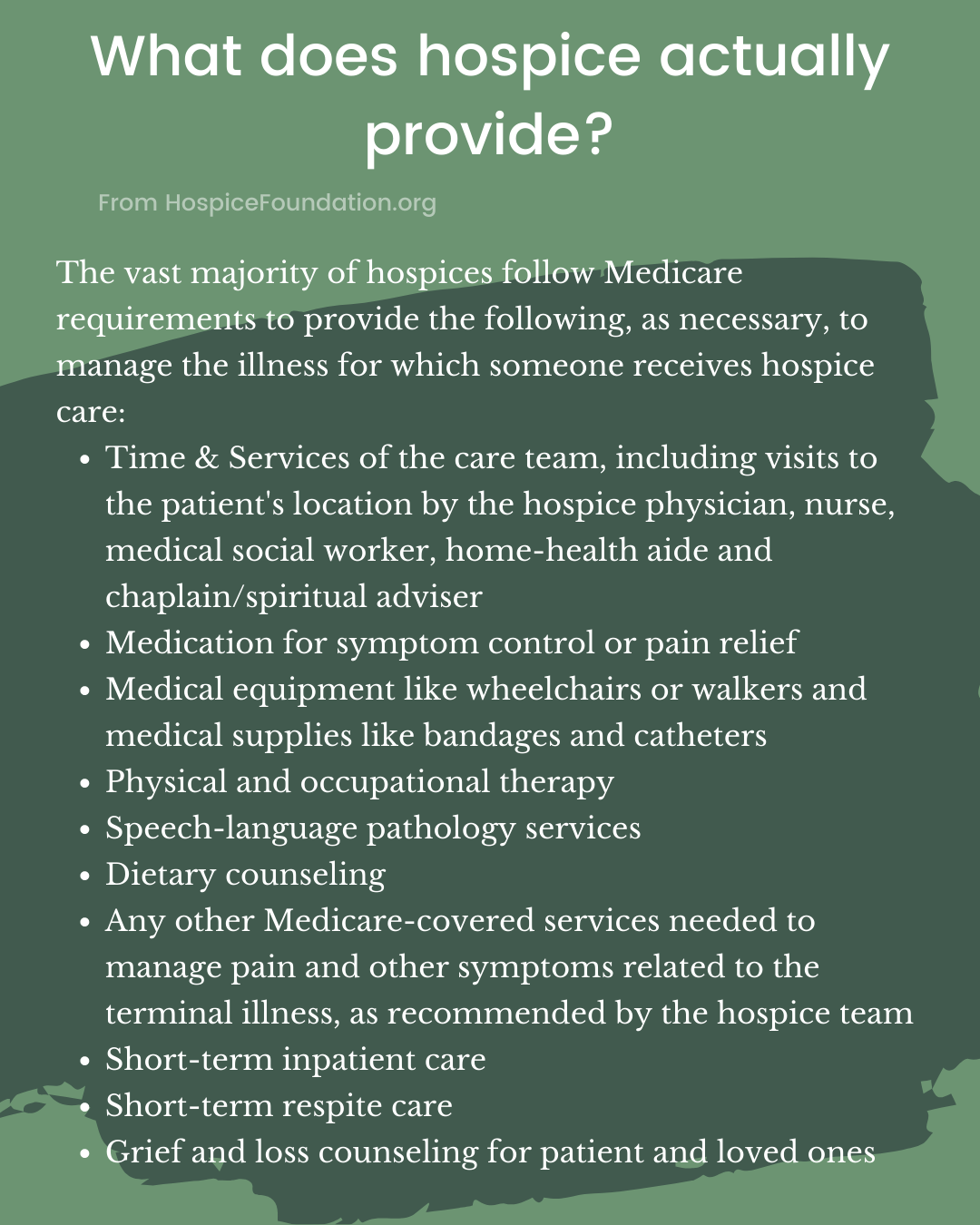
I know that hospice can be a big topic, especially for those working with the terminally ill, so I tried to keep things simple and informative by sharing some information from the Hospice Foundation of America (USA).
I first shared this over on Instagram and got a few really nice comments from fellow death workers. Basically, literacy on this subject is important for the general public! Seriously! In the US, most people who experience non-accidental death will experience hospice as the “end of the road” as they approach their death. Every single person I have known that’s died from prolonged illness has worked with hospice in some way. It’s important to know what all of it actually is and what it means for you so you can mindfully decide if you actually want to engage hospice.
Hell, you might opt instead to leave medical care to die at home, with cannabis for your pain and anxiety and a psilocybin trip to help you find deeper meaning as you take your last breaths. Things in the death world are changing, y’all!
Regardless of your opinions on hospice — whether it’s overinflated misuse of Medicare or a wonderfully supportive and collaborative gift of a service, it’s important to educate yourself and those around you. Please take the time to learn about this before the decisions are thrust upon you in crisis.
When is it time for hospice?
Deciding when it’s time for hospice is difficult and should be discussed with loved ones and a physician. It is generally time for hospice when:
the patient has 6 months or less to live, according to a physician.
the patient is rapidly declining despite medical treatment (weight loss, mental status decline, inability to perform activities of daily living).
the patient is ready to live more comfortably and forego treatments aimed at prolonging life.
Hospice is:
medical care to help someone with a terminal illness live as well as possible for as long as possible, increasing quality of life.
an interdisciplinary team of professionals who address physical, psychosocial, and spiritual distress focused on both the dying person and their entire family.
care that addresses symptom management, coordination of care, communication and decision making, clarification of goals of care, and quality of life.
List of Services:
The vast majority of hospices follow Medicare requirements to provide the following, as necessary, to manage the illness for which someone receives hospice care:
time and services of the care team, including visits to the patient’s location by the hospice physician, nurse, medical social workers, home-health aide, and chaplain/spiritual adviser.
medication for symptom control or pain relief.
medical equipment like wheelchairs or walkers and medical supplies like bandages and catheters.
physical and occupational therapy.
speech-language pathology services.
dietary counseling
any other medicare-covered services needed to manage pain and other symptoms related to the terminal illness, as recommended by the hospice team.
short-term inpatient care (e.g. when adequate pain and symptom management cannot be achieved in the home setting)
short-term respite care (e.g. temporary relief from caregiving to avoid or address “caregiver burnout”)
grief and loss counseling for patient and loved ones.
Facing tough decisions near the end of life
When determining if hospice is the right decision, these questions will guide the conversation. Do you/your loved one want:
artificial nutrition and hydration (whether or not to have a feeding tube or intravenous fluids)?
cardiopulmonary resuscitation (CPR) (whether or not to restart the heart if it stops beating)?
mechanical ventilation (intubation) (whether or not to use a breathing machine to breathe for a person whose lungs have stopped working)?
to discontinue treatment aimed at curing the disease in order to pursue comfort care?




PRESS: Featured in the Acadiana Advocate

The “Be You” Column by Aileen Bennett is iconic in my little corner of the world and I’m honored to have a chance to answer these questions and be featured in the Acadiana Advocate, a very well respected news publication in the area.
Everyone who is featured answers the same questions, sharing bits of their personality and character throughout.
Distanced Grieving
Now is the time to make a plan.

Let’s be real. Our Covid-19 numbers are the worst they’ve been all year as of this writing. To be frank, even for those of us who are taking the most precautions, we need to prepare to lose someone in our circle in the coming months, if we haven’t already.
Now is the time to make a plan.
Don’t expect someone who has experienced a loss to tell you how to support them.
They’re too busy in their own world of grief and cleaning up affairs and such to necessarily tell you what they need. They just need the things.
They may be distanced from you, but unless they’ve clearly and intentionally cut you out of their life, you can still make contact and help.
Help with ordinary things. The traditional help is still relevant for a reason. Write a heartfelt letter or send a card. Send them ready-to-heat or ready-to-eat food. Offer to meet up with them for a walk. Venmo them some cash for a coffee or other kind of treat or whatever it is they need.
Get your team of support on board now so everyone knows to check in.
Your relationships this year and especially in time of crises are likely to change. They just will. And we can’t fault anyone for that. These are unprecedented times and we have to give ourselves and others grace. Our capacity for relationships is just… lower. But! Knowing we have support from people, even if we can’t dedicate ourselves to nurturing that relationship or friendship like we want to, can be so comforting.
Get in touch with the people you care about who you think might be able to check in with you and be willing to support you, and have you support them. Talk about collective grief over the pandemic and how the events of the year have affected your lives. Get in tune now so that when/if tragedy strikes, you’ll each know where the other stands and you can be better support, even from a distance.
You can’t fix or erase the pain so don’t try.
Being present with the truth of it helps remove shame of hard feelings. Seriously, there is so, so much guilt and shame around tough feelings and especially grief. BREAK THAT WALL. This is all REAL and it can’t be healthfully swept under a rug. Be real with yourself and with others, and be someone your people can come to and know they are safe expressing the hardest parts of processing. We all go through it at some point. In this way we are all on equal playing fields.
It’s hard. Say it’s hard.
Check in regularly, even if you have to set a reminder to do so.
I set reminders to check in with friends and have ZERO shame about it. Our day-to-day lives can take over and a week or a month goes by and we realize we haven’t spoken to one of our favorite people, someone we know we wanted to stay in touch with. And then the guilt and awkwardness of trying to say, “I forgot about you because I got lifed.” gets overwhelming and we wait even longer to reach out.
Here’s the thing: A simple “thinking of you” text that doesn’t require a response can be a lifeline.
Ask the right questions and don’t turn away when things get tough.
“What’s the hardest part?”
“How are you taking care of yourself?”
Practice active listening and just HEAR what your friend has to say. Don’t jump in at every pause. Give them space to breathe, to think. Give yourself time to take it in and imagine how they’re feeling. Reflect back to them what you hear and affirm that feeling however they’re feeling is okay. Don’t tell them they’re wrong or need to feel a different way. It’s all PART OF IT.
One of the most devastating feelings can be to open up to someone and have them cringe, turn away, or walk away when the ugly or scary insides of an emotion get cracked open. It’s happened to me and my first instinct reaction is to close back up REAL TIGHT and be a lot more discerning about what I share. While that’s protective of me, it robs my loved ones from knowing how I really feel and being able to help me. So, as a loved one, do your very best to just meet people where they are. You have hard parts, too, and what you’re really uncomfortable about might just be your own reaction, not theirs. Respond accordingly.
Make a plan for joy.
Don’t let sorrow take over. It’s easy to let it. But you need balance. Share happy memories or make favorite meals.
Decorate a memory board or create a special memory box to flex your creativity and process grief in an alternative away.
Do what’s healthy and feels good.
Dance. Sing. Create. Live a life your lost loved one would have wanted for you. Or if there was animosity, live freely knowing they’re no longer here to pressure you otherwise.
Get Outside Support.
Familiarize yourself with the Death Cafe site — Death Cafes are place where people can talk about all aspects of death, dying, and living. They are not grief counseling groups but rather participant-lead free discussions. Each session is unique and goes in the direction of the people in attendance. Much can be learned and shared.
Many community and faith-based grief counseling groups have gone virtual — find those for your community or find one online you would like to attend and bookmark it for you or others. Having those resources available BEFORE you need them will make the decision of attending much easier when the time comes.
And, if you feel it necessary, enter into counseling or a relationship with a professional grief counselor. These relationships can be brief or ongoing, but can really be a lifeline for those struggling particularly hard after a loss. Many free resources are available and many therapists, psychologists, and counselors have adapted their practices for virtual meetings.
Lastly, understand these truths:
There is no timeline for grief.
There is no set way to grieve.
People will say stupid things, but everyone is trying their best.
xo, Madison
Why You Should Review Your Life

I studied ancient philosophy my freshmen year of undergrad and so much of it has stuck with me. In particular, this phrase is spouted by so, so many, but I wonder often how many people who mention it really internalize the wisdom held within this phrase.
To be sure, this phrase was mentioned when Socrates was on trial and chose death over being exiled in a situation that would prevent him from continuing his intellectual pursuits, as pursuing intellect and wisdom through is philosophical method of logic was of highest importance in his life.
So. Knowing that, how can we apply this phrase and philosophy to our own life? I’ve seen many people apply it in such a way that continued self-examination, therapy, deep work is necessary to live their lives. I believe this is admirable, but a little beside the point. I believe the point is that we should first know what our passion is, our purpose for living, the thing that lights us up, and then live into THAT. I believe that floating through life without direction, intention, or positive motivation is akin to already being dead.
THAT is why I think it’s important to review our lives. I don’t think you need to spend every waking moment trying to figure out what’s wrong with you, what you need to fix, pouring over the past and painstakingly analyzing what the future could bring. I’ve tried that. Trust me, it’s exhausting and only produces anxiety and guilt in the end. At least, that was my experience.
I think you should review your life in a way that you can understand your values and go forward in a meaningful-to-you way. Everyone’s passions, purposes and values are different and so how everyone makes decisions about their lives and their experiences is different. That’s why I don’t work in a set formula and why I set my sessions to last between one and two hours with clients. Some people need the full two hours to think things out, to hear different perspectives, and bounce ideas back and forth. Some people do better thinking on their own (like me) and like to be sparked for inspiration in sessions and then come back to the next one to share discoveries and learn how to take their own work further.
So really why do I think you should review your life? Definitely because I don’t want you floating around already practically dead. But also because
I want you to feel a sense of purpose.
I want gratitude to come easily to you. I want you to feel present and open and aware of your precious existence each day and intentionally create your beautiful life into something that leaves your little corner of the world better than it was when you came into it. I want you to be real about your wisdom and what it is that you lack and be compassionate with others, knowing they’re just doing their best, too.
I want you to feel free to create and explore and love and ask and learn in the world and know that none of it is wasting your time because everything you choose is deliberate and intentional and in line with your values and the life you CHOOSE to live, not floating through and doing what you’re “supposed to do” and not just accepting what happens to you in this life.
Contact me with your thoughts or questions.
xo
You should TOTALLY plan your own memorial.

Yes, you really should plan your own memorial.
Why should you? How do you even start?
It removes the burden of planning from your loved ones’ shoulders.
You can insert your own personality into the ceremony.
You can make sure you set up nice things for your loved ones.
You can share your wishes and get peace of mind knowing it is taken care of.
Let’s get right to it and talk about what all these things mean.
Removing the Burden on Loved Ones
Planning is hard when you’re grieving.
Real talk. I’ve experienced some crappy funeral planning. For one, the door in the meeting with the funeral director had to be locked and authorities called because someone was banging on the door insisting the plans be different. Things can get weird really quickly when your plans aren’t laid out clearly. Don’t leave your loved ones vulnerable to drama.
It’s really easy to say that the memorial is for them so they can decide what they want to do, but when there are several people who love you and want to be part of the planning are grieving, disagreements can turn into bigger deals than they should be. Just trust me on this one. You want to help out your loved ones in this way. You really do.
Decide how you want your body disposed of: burial, cremation, or something else, and make arrangements for it.
So, nowadays, depending on where you live and your financial means, there are loads of different options for your body after you’ve died. While being restricted in options based on your funds sucks, that’s where we’re at. Research the options in your area (and alternative options that your body can be transported to) and you can start setting aside money for it or make sure that your life insurance plan would cover the cost of your decision.
One option you may not already know you have is that you CAN have a natural, “green” burial — you can set up your own natural cemetery if you have the land (check your local laws — it’s actually pretty easy!) or you can try to find one within a few hours — they’re typically in beautiful places like groves in forests, or hills and prairies with beautiful views.
There are also options beyond the regular cremation like having your ashes processed into solids that look and feel like stones, or having your remains transformed into soil or into a pod to plant alongside a tree. Go exploring and see all your options!
Where do you want your memorial to be?
Many memorials take place in funeral homes, simply because it’s easier. But you can always choose whatever you want! It’s just a matter of what is available at the time. Decide ahead of time if you want your memorial to be at someone’s home, at a community center, at a restaurant or bar, or even at a public park, even a destination memorial? You could absolutely set aside money for your loved ones to go away for a weekend to a destination of your choice and have them bring others in virtually for the formal memorial ceremony. So many options!
Who will be the faith leader or MC to manage the ceremony?

You may or may not want to have a traditional faith leader manage the flow of your ceremony — it’s up to you! You could have a friend do it, or hire someone professional from the community to manage the schedule of the ceremony. Either way, it’s helpful to designate someone to be the MC, host, or leader of the ceremony to make sure that everything gets done in appropriate times and the ceremony goes smoothly.
What pictures, objects, or videos do you want on display?
While, for me, it was a joy to go through my grandmother’s old albums to pick out pictures for her slideshow to be viewed on her funeral-home-created memorial page and on a TV at the memorial service, it still took up a ton of time and was awkward to manage between her children who all would be represented - everyone felt the need to give approval and look over things. For that experience, it wasn’t too bad, but I could see it being complicated for other families with more issues or strained relationships.
Additionally, setting aside things you want displayed at your memorial can mean marking pieces of artwork and choosing a particular photograph or headshot to be displayed for those in attendance. You can even choose to have a display of collected items that those in attendance can choose from to take home with them.
Make a list of people to contact.
This one is SUPER important. It can be devastating to find out a friend of yours died and you didn’t find out in time to contribute to the memorial or be in attendance at the ceremony. Make sure you have a list of names, emails, and phone numbers of the people you definitely want informed in the case of your death. You can even make a decision of who of your family or friends is comfortable making the calls not only to the rest of the family but also to the people on your list. Talk to your loved ones and they can choose this task for themselves instead of having it thrust on them.
Who will manage any potential virtual element if distance is a barrier?
So, this is a new one for most people. Distanced memorialization has become common with our current worldwide pandemic (Coronavirus in 2020) but it has always been an option for people living across the world who can’t leave to attend. Having an option for people who can’t physically attend is now more important than ever. The person you designate to manage this should be very good with technology and highly capable of sharing the information needed to those who will use it.
You can also designate a service to manage this for you, like an end-of-life doula, audio-video company, or even a virtual assistant.
Set aside funding for all the elements ahead of time.
You have several options for this. You can create a special savings account to put money into, and keep notes on how much you project each element of your ceremony to cost. Many people purchase life insurance policies that they project to cover not only their body services and their cremation/burial/funeral/memorial but also to cover the lost wages in time off and other expenses around recovering from loss. (These expenses may include additional self-care like a trip to recharge, additional therapy, and other things.)
Insert Your Personality
What kind of food do you want served?
Do you want typical party foods from a deli, or specifically your favorite meals? Do you want to make sure there are options for different dietary restrictions? If you want particular food served, make note of the recipes and talk with your loved ones to decide who will manage making it.
You can also decide who will be in charge of make sure the food is set up properly or pick up any supplies. Special coffee or tea? Certain drinks? A signature cocktail? You decide!

What kind of music do you want played or sung? Make a playlist!
It is common for people to want certain hymns or songs sung at their memorial. I’d say the most common is definitely “Amazing Grace”. Perhaps you want particular songs played during particular times of the service? Or a loop of different songs played along with a loop of your photo or video slideshow? Especially with shared playlists on Spotify, Apple Music, and other music platforms, it’s really easy to create a list of your favorite songs for your loved ones to remember you by and also to share a playlist of the songs you want played at your memorial. You can leave directions about when to play what in the notes of your playlist.
Do you want any specific poems or passages shared?
Along those same lines, many people want particular religious passages, poems, or excerpts from books read aloud at their memorial. You could also write your own message and choose the person to read it aloud. Talk to your loved ones and decide together who will read what passages. Allowing them to be part of the decision process is a great help to them, and a big comfort when it comes time for them to perform the reading during the ceremony.
Who will speak/give eulogies/share stories?
And beyond sharing pre-determined songs and passages, who do you trust to write their own speech or share about their time with you or about your life? This one is the biggest ask of these options. These moments can get particularly heavy and emotional for the speaker, depending on the person and your relationship. This is a wonderful conversation to have before the time comes — so you can know that the person sharing on your behalf will have your blessing.
Do Something Nice for Loved Ones
For donations, would you prefer flowers or plants?
I know flowers are REALLY common to donate and have delivered for funeral and memorial services. I get it, they’re beautiful. But think about it. They die. And then the family who took them home after the service gets to watch the flowers die to mark time passing since their loved one has died. I say NAHHHHH to flowers. Instead, you can (and I think you should) encourage people to purchase sustainable and easy-to-maintain plants. Lush greenery can be so beautiful and represent a celebration of life. In addition, those plants can go home with loved ones and they can take care of the plants for years in remembrance of you.
Plants that are easy to care for that I recommend:

Ivy
Pothos
Philodendron
Bamboo
Fiddle Leaf Fig
herbs, galore!
allll the succulents
ZZ (Zanzibar) Plant
“spider” plant
“snake” plant
Jade plant
Chinese evergreen
Parlor palm
Rubber Plant
Dumb Cane
Choose the funeral card design and content for guests to keep.
Funeral cards may SEEM too cheesy or traditional, but having these to keep from all my friends’ and family’s funerals has been really comforting. I can keep them in a special place and remember them fondly.
Funeral homes typically have religious images to place full size on the back, with a picture of you and a passage underneath on the other side.
So, for a basic funeral card, you need to pick the image for the back, the portrait of you, and the short passage you want included on the card. Your date of birth and your date of death with also be included on the card.
If you like you can also set aside the digital files yourself and make sure someone has access access to them so they can add the date of your death and get something custom printed.
My recommendation as to quantity is to get at least three times as many as you think you need. These funeral cards are things that people collect and I personally like to take a few, especially for people who were particularly special to me, so I can keep them in several places and have more in case they get lost. Always get more.
Choose a guestbook for people to write their names and leave notes & stories.
Funeral homes will typically provide a guestbook for your service, but if you aren’t holding your service there, you’ll need to get your own.
Guestbooks from memorial services are not only places for guests to write their names, but also a place to use as a sort of scrapbook for the event. In it, you can add the obituary, copies of the program, peoples speeches, pictures of the setup, and anything else special from the event.
Another good idea: Let people know in the invitation that they can bring written stories or pictures that they wanted added to the book, and that they must write their names on their submissions.
If you do have your own guestbook, make sure that guests write their email address, phone number, and mailing address along with their names - or some reliable way to communicate with them. Your loved ones hosting the event will want a way to send thank you notes to those in attendance, and having contact information for people who cared for you can give your grieving loved ones a list of people to call when they are missing you.
Share and Get Peace of Mind
Share this experience of planning with those close to you.
Whether you include them in the decision process or you let them know where your plans are for when the time comes, knowing that there IS a plan can give them peace of mind. They will thank you for giving them the gift of not wondering what it is you want, and for writing out the seemingly silly details of what to do. Confusion and disagreement can be particularly hard to deal with when you’re grieving. Give them this kindness of preparing ahead.
Keep your wishes written and in a safe place.

There are several ways to go about this.
You can create a shared document on several different platforms (Google Drive, Evernote, DropBox, even Apple Notes) so that any time you make a change, that change is also updated for anyone it is shared with.
You can create a special file on your computer with all the relevant documents and information — just make sure to back it up on a separate drive or email complete copies to someone you trust.
You can print out your plans and keep them your other important documents. But remember, my recommendation is to always have a backup or additional copy with someone you trust.
Just make sure it’s recorded in SOME way and dated!
This just covers the basics.
I know, it seems like a lot. It can be. But don’t let it overwhelm you. Planning this ceremony can be a beautiful process and a really, really kind gift for your loved ones after you’ve died.
I wish the people in my family who died already had pre-planned their services. Having those things decided and intentional would have made the whole experience much more special instead of our floating through numb and going through the motions with decision fatigue on top of grieving.
Will you be creating a plan for your own memorial? Head to my contact page or find me on social media and let me know! I would love to hear of any unique plans you have or what the experience of planning it has been like for you.
Do thy worst…
I choose what I value, what my priorities are, and how I spend my time.
… but not really! Let me explain.

I have the above pictured poem excerpt from John Dryden posted up in my bedroom and I contemplate it daily.
You see, I deal with anxiety. I get wrapped up in the future, in what’s left unfinished… to say the least… a LOT. So to healthfully cope with that, I’ve worked diligently to focus on my priorities, and further, make sure my priorities are what I truly value and not what I or others or society thinks I SHOULD value.
I need proper rest and to rise with true motivation in the morning, so I need to know that what I’m doing with my day is vital, is positive, is something I value. In doing this, I am able to fully claim each day as my own, knowing that when I go to bed, I’ve done my best. Now, I’m not perfect. Some things remain undone. Some things remain unsaid. That’s the ebb and flow of life. But the really vital stuff? The stuff that I can do and person I can be throughout the day to know I’ve not wasted away precious time? That’s what I focus on.
And so, with this quote, I am reminded to fully, really live each day. That I choose what I value, what my priorities are, and how I spend my time. That I may not always get it right, but I will surely try my best and each day keep going.
I wish for that for all of my clients.
xo
Take a minute to make contact.
What would you say to them, what would you want them to know if you knew you'd die soon?

Your mission today: call or text or message someone who has impacted your life positively and ask what they're up to, especially if you're out of touch. What would you say to them, what would you want them to know if you knew you'd die soon?
I don’t think I’ve personally experienced the sudden death of someone when I was in the middle of a fight with or anything, but I’ve definitely experienced what it feels like to have things left unsaid between myself and someone who has passed away. There are several people in my life, who have died, who made a great impression on me, who I wish I kept more in touch with, who I wish I had taken the time to share my honest feelings of admiration and gratitude for.
One person in particular was this guy named Ric.
He was a high school friend of my mom, living near Dallas with his family. My mom and he were friendly but didn’t stay too much in touch. That is, until they could passively like and comment in each others’ directions on Facebook. When I had a weekend self-development workshop in Dallas, I asked around who of my friends I could stay with instead of getting a hotel. My mom asked around, too, and Ric volunteered as they had plenty of space.
I drove out there and was welcomed warmly. The year was nearing Christmas and so their tree was up, and their front music room had been converted into a winter wonderland with a candlelit Christmas village complete with a looping model train. It was magical.
We spent some great time getting to know each other and he shared his favorite martini with me — which I’m now realizing is the influence on my own favorite martini, and even have it tattooed on my leg: it’s a Bombay Sapphire martini - a drop of dry vermouth swirled around the chilled glass and thrown out, the gin stirred vigorously with ice, and topped with a fresh lemon twist. More magic.

We sipped martinis and he introduced me to my now favorite Christmas movie, The Family Stone. It’s an ensemble cast film, based on a play, that beautifully examines a complicated family and what it means to really care for others and choose to love and embrace ourselves and others, flaws and all. And ya know, I’m realizing after typing these things out how much MORE of an impact Ric had on me than I even previously thought.
You see, he was just… so.. genuine.

We became friends on Facebook leading up to my visit and he understood some of my interests enough to make me a special playlist, a CD of songs to listen to on my road trip back home. And let me tell you— that CD is flawless and so full of joy. I still keep it in my car for road trips, over a decade later.
Long story short, we had a great time and stayed in touch a little but I was still in college and he had a life, too, and we just went our separate ways. A familiar story of chance friends.
Then one day, Ric suddenly died of an aneurysm.
I wasn’t close enough with his family or anyone else in his life to warrant a six hour one-way drive for a three hour event. No one really knew how great our little friendship was and we never got a chance to expand on it. And sometimes that’s how it happens.
I panicked. I cried. I was enraged. I was full of regret. I was lost. I was confused.
I sent flowers. And cried and cried and cried.
His family was so lucky to have him. We all were.
And I wish I had given myself the opportunity to really share that sentiment with him and his family before he died.
So. Don’t make the same mistake I did. Tell people that you care, that you appreciate them.
I get it, sometimes we don’t know the impact someone leaves on us until we can look back. I don’t fault you for that. But be aware of the positive influences in your life and try to express your gratitude, your admiration, your wonder, and your awe with those people and opportunities. Trust me on this one.
Here’s a Spotify playlist of the tracks on the CD he made me. Enjoy :)